WHAT’S IN A NAME
By Kyle LoJacono
This week will look into how Lutz got its name.
LUTZ was first settled as a Catholic mission in the late 1880s by Luxembourg priest Francis Stemper.
Stemper bought many acres of land in the area west of Lake Bruing, now Lake Stemper, to start the mission. Those who settled in the Stemper colony were primarily from Luxembourg.
The heart of the Stemper colony was located along present day US 41 south across from the First Baptist Church of Lutz.
The first structure Stemper built was the church, which doubled as the school, on the northwest end of the former Lake Bruing. Houses sprang up around the church. The first cemetery was on what is now Cypress Cove Road off Sunset Lane.
The Stemper post office was established on Nov. 17, 1893 with the namesake priest as the postmaster. The post office was ordered closed in February 1899, but reopened on April 13, 1899.
In 1907, the Tampa Northern Railroad was built. It ran from Tampa, through Stemper and further north.
The old wood-burning train engines required frequent stops to take on more wood, which were called wood rack stops. The stop just north of Stemper was named Lutz, after early Tampa Northern engineer William Lutz. William was a young engineer from West Virginia; his brother Charles ran a sawmill in what is now Odessa.
Charles built a tram track in 1909 to carry his lumber 10 miles east, connecting his sawmill to the Tampa Northern line at brother William’s Lutz station.
The Gulf Coast Railroad, which ran east-west toward Tarpon Springs, opened soon after the Tampa Northern line. The two tracks crossed at the Lutz station. The wood stop and two rail lines helped put the fledgling town on the map, but with the name North Tampa.
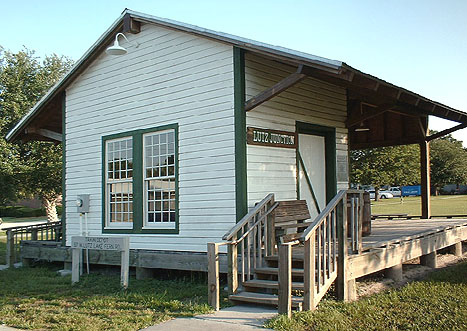
The joining of the railroads at the Lutz station prompted the stop to be renamed Lutz Junction. The replica of the old Lutz train depot now stands at U.S, 41 on the north side of W. Lutz Lake Fern Road. The original station was on the south side of Lutz Lake Fern.
During that time, North Tampa residents got their mail from the Stemper post office, located about three miles south. Early in 1912, they petitioned the U.S. government for their own post office, but were turned down.
Instead of asking for another post office, North Tampa residents signed a petition to have the Stemper location moved to North Tampa.
On Jan. 27, 1913, the U.S. Post Office granted the petition. However, the department feared North Tampa Post Office would be confused with the Tampa site.
The department chose to name it the Lutz Post Office after the Lutz Junction train depot. The town has been known as Lutz ever since.
For additional information on how Lutz got its name, visit www.fivay.org.
*The Laker and the Lutz News series on how historic places were named will continue throughout the summer. Information is provided by interviews with Pasco County historian Jeff Miller of Fivay.org and the West Pasco Historical Society. See how Wiregrass and Zephyrhills got their names next week, which will be the final edition of What’s in a Name.